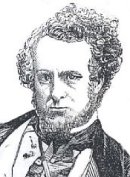
|
Famous
Players
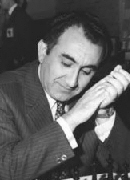
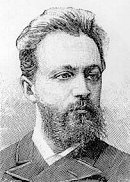
Tigran Petrosian
Tigran
Petrosian (June 17, 1929 – August 13, 1984) was World
Champion from 1963 to 1969.
He is often known by the Russian
version of his name, Tigran
Vartanovich Petrosian (Russian:
Тигран Вартанович Петросян). He
was nicknamed "Iron Tigran" due
to his playing style because of
his almost impenetrable defence,
which emphasised safety above
all else. He was a Candidate for
the World Championship on eight
occasions (1953, 1956, 1959,
1962, 1971, 1974, 1977 and
1980). He won the world
championship in 1963 (against
Botvinnik), successfully
defended it in 1966 (against
Spassky), and lost it in 1969
(to Spassky). Thus he was the
defending World Champion or a
World Champion candidate in ten
consecutive three-year cycles.
He won the Soviet Championship
four times (1959, 1961, 1969,
and 1975). He was arguably the
hardest player to beat in the
history of chess.
Petrosian's first important result was a shared 1st-3rd
place at the 4th USSR Junior Championship, Leningrad 1945,
with 11/15; he tied with Y. Vasilchuk and A. Reshko. In the
6th Armenian Championship, Yerevan 1946, Petrosian won the
title with 9/10. But that same year at Leningrad for the
Candidates to Masters event, he could only score 6½/15 for a
shared 8th-11th place. In the 7th Georgian Championship,
Tbilisi 1946, Petrosian scored 12½/19, and was second among
Georgians; the winner Paul Keres (18/19) played hors
concours ("far ahead of the competition"), and conceded just
two draws, one of them to Petrosian. He failed badly at the
USSR Championship semi-final, Tbilisi 1946, with just 6/17,
for a shared 16th-17th place. Petrosian claimed the title in
the 5th USSR Junior Championship, Leningrad 1946, with an
unbeaten 14/15. In the 1947 Armenian Championship, Petrosian
shared 2nd-4th places, with 8½/11, behind Igor Bondarevsky,
who played hors concours. In the 1948 Championship of
Caucasian Republics, Petrosian came 2nd with 9/12, behind
winner Vladimir Makogonov. In the 8th Armenian Championship
of 1948, Petrosian shared the title on 12½/13 with Genrikh
Kasparian.
Despite
growing up and starting his chess career in Georgia,
Petrosian was regarded by his Soviet teammates as Armenian.
For example when Bobby Fischer said he intended to beat "all
the Russians" at the Bled 1961 tournament, Paul Keres told
him that there were no Russians in the tournament: Mikhail
Tal was a Latvian, Petrosian an Armenian, Efim Geller a
Ukrainian, and Keres himself was an Estonian. Western
publications described Petrosian as an Armenian.
 |
|
|
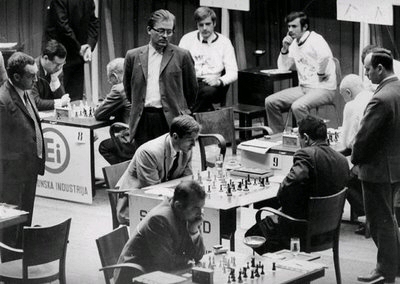
Petrosian (seated right) plays Fischer during
the
USSR v Rest of the World match in 1970. |
|
A
significant step for Petrosian was moving to Moscow in 1949,
where he began to play and win many tournaments. Moscow,
along with Leningrad and Kiev, were the three major Soviet
chess cities. He won the 1951 tournament in Moscow, and
began to show steady progress. By 1952 Petrosian became a
Soviet and international Grandmaster in chess. Prior to
taking up chess full time though, Petrosian was a caretaker
and a road sweeper. In 1952, he married Rona Yakovlevna
Avinezar, a translator who was active in chess circles.
In the
1963 World Championship cycle, he won the Candidates
tournament at Curaçao in 1962, then in 1963 he defeated
Mikhail Botvinnik 12½–9½ to become World Chess Champion. His
patient, defensive style frustrated Botvinnik, who only
needed to make one risky move for Petrosian to punish him.
Petrosian is the only player to go through the Interzonal
and the Candidates process undefeated on the way to the
world championship match. Petrosian shared first place with
Paul Keres at the Piatigorsky Cup, Los Angeles 1963, his
first tournament after winning the championship.
Petrosian
defended his title in 1966 by defeating Boris Spassky
12½–11½. He was the first World Champion to win a title
match while champion since Alekhine beat Bogoljubov in 1934.
In 1968, he was granted a PhD from Yerevan State University
for his thesis, "Chess Logic". In 1969 Spassky got his
revenge, winning by 12½–10½ and taking the title.
He was the only player to win a game against Bobby Fischer
during the latter's 1971 Candidates matches, finally
bringing an end to Fischer's amazing streak of twenty
consecutive wins (seven to finish the 1970 Palma de Mallorca
Interzonal, six against Taimanov, six against Larsen, and
the first game in their match). Nevertheless Petrosian lost
the match.
Some of his late successes included victories at Lone Pine
1976 and in the 1979 Paul Keres Memorial tournament in
Tallinn (12/16 without a loss, ahead of Tal, Bronstein and
others), shared first place (with Portisch and Huebner) in
the Rio de Janeiro Interzonal the same year, and second
place in Tilburg in 1981, half a point behind the winner
Beliavsky. It was here that he played his last famous
victory, a miraculous escape against the young Garry
Kasparov.
Petrosian died of stomach cancer in 1984 in Moscow. He is
buried in Vagankovo Cemetery and in 1987 13th World Chess
Champion
Garry Kasparov unveiled a memorial in the cemetery at
Petrosian's grave which depicts the laurel wreath of world
champion and an image contained within a crown of the sun
shining above the twin peaks of Mount Ararat - the national
symbol of his native Armenia.
2100 Petrosian
games in
PGN
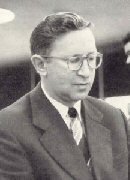
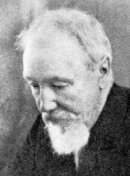
Vasily Smyslov
Vasily Vasiliyevich Smyslov
(Russian: Васи́лий Васильевич
Смысло́в) (March 24, 1921 -
March 27 2010) was World Chess
Champion from 1957 to 1958.
He was a Candidate for the World
Chess Championship on eight
occasions (1948, 1950, 1953,
1956, 1959, 1965, 1983, and
1985). Smyslov was twice Soviet
Champion (1949, 1955), and his
total of 17 Chess Olympiad
medals won is an all-time
record. In five European Team
Championships, Smyslov won ten
gold medals.
In 1938, at age 17, he won
the USSR Junior Championship. That same year, he tied for
1st-2nd place in the Moscow City Championship, with 12½/17.
However, Smyslov's first attempt at adult competition
outside his own city fell short; he placed 12th-13th in the
Leningrad-Moscow International tournament of 1939 with 8/17
in an exceptionally strong field. In the Moscow Championship
of 1939-40 Smyslov scored 9/13.
In his first Soviet final,
the 1940 USSR Championship (Moscow, URS-ch12), he performed
exceptionally well for 3rd place with 13/19, finishing ahead
of the reigning champion Mikhail Botvinnik. This tournament
was the strongest Soviet final up to that time, as it
included several players, such as Paul Keres and Vladas
Mikėnas, from countries annexed by the USSR, as part of the
Nazi-Soviet Pact of 1939.
The Soviet Federation held
a further tournament of the top six from the 1940 event, and
this was called the 1941 Absolute Championship of the USSR,
one of the strongest tournaments ever organized. The format
saw each player meet his opponents four times. The players
were Botvinnik, Keres, Smyslov, Isaac Boleslavsky, Igor
Bondarevsky, and Andor Lilienthal. Smyslov scored 10/20 for
third place, behind Botvinnik and Keres. This proved that he
was of genuine world-class Grandmaster strength at age 20, a
very rare achievement at that time.
The Second World War
forced a halt to most international chess. But several
tournaments involving Soviet players only were still
organized. Smyslov won the 1942 Moscow Championship outright
with a powerful 12/15 and he emerged as champion from the
1944-45 Moscow Championship with 13/16.
As the war ended,
organized chess picked up again. But Smyslov's form hit a
serious slump in the immediate post-war period. In the 1945
USSR Championship at Moscow (URS-ch14), Smyslov was in the
middle of the very powerful field with 8.5/17; the winner
was Botvinnik, with Boleslavsky and the new star David
Bronstein occupying second and third places.
Smyslov played in the 1948
World Chess Championship tournament to determine who should
succeed the late Alexander Alekhine as champion, finishing
second behind Mikhail Botvinnik, with a score of 11/20. With
this second-place Smyslov entered the 1950 Budapest
Candidates' tournament. He scored 10/18 for third place,
behind Bronstein and Boleslavsky, who tied for first place.
He was awarded the International Grandmaster title in 1950
by FIDE on its inaugural list.
After winning the
Candidates Tournament in Zurich 1953, with 18/28, two points
ahead of Keres, Bronstein, and Samuel Reshevsky, Smyslov
played a match with Botvinnik for the title the following
year. Sited at Moscow, the match ended in a draw, after 24
games (seven wins each and ten draws), meaning that
Botvinnik retained his title.
Smyslov had again won the
Candidates' Tournament at Amsterdam in 1956, which led to
another world championship match against Botvinnik in 1957.
Assisted by trainers Vladimir Makogonov and Vladimir
Simagin, Smyslov won by the score 12.5-9.5. The following
year, Botvinnik exercised his right to a rematch, and won
the title back with a final score of 12.5-10.5. Smyslov
later said his health suffered during the return match, as
he came down with pneumonia, but he also acknowledged that
Botvinnik had prepared very thoroughly.
Smyslov didn't qualify for
another World Championship, but continued to play in World
Championship qualifying events. In 1959, he was a Candidate,
but finished fourth in the qualifying tournament held in
Yugoslavia, which was won by the rising superstar Mikhail
Tal. He missed out in 1962, but was back in 1964, following
a first-place tie at the Amsterdam Interzonal, with 17/23.
But he lost his first-round match to Efim Geller.
 |
|
|
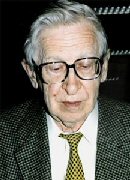
2006 |
|
In 1983, at the age of 62, he
went through to the Candidates'
Final (the match to determine
who plays the champion, in that
case Anatoly Karpov), losing 8.5
- 4.5 at Vilnius 1984 to Garry
Kasparov, who was ¼ his age, and
who went on to beat Karpov to
become world champion in 1985.
Smyslov won two Soviet
championships. He tied for first and second places in the
1949 Soviet Championship (URS-ch17) at Moscow, with David
Bronstein. At Venice 1950, he finished second with 12/15. He
tied for first place with Efim Geller at Moscow 1955 in the
URS-22ch, but lost the playoff match. He won at Mar del
Plata 1966.
Smyslov represented the
Soviet Union a total of nine times at chess Olympiads, from
1952 to 1972 inclusive, excepting only 1962 and 1966. He
contributed mightily to team gold medal wins on each
occasion he played, winning a total of eight individual
medals. His total of 17 Olympiad medals won, including team
and individual medals, is an all-time Olympiad record.
He was known for his
positional style, and, in particular, his precise handling
of the endgame, but many of his games featured spectacular
tactical shots as well. He made enormous contributions to
chess opening theory in many openings, including the English
Opening, Grunfeld Defence, and the Sicilian Defence.
Perhaps in tribute to his
probing intellect, Stanley Kubrick named a character after
him in his film 2001: A Space Odyssey.
Smyslov was a fine
baritone singer, who only positively decided upon a chess
career after a failed audition with the Bolshoi Theatre in
1950. He once said, "I have always lived between chess
and music." On the occasion of a game against Botvinnik,
he sang to an audience of thousands. He occasionally gave
recitals during chess tournaments, often accompanied by
fellow Grandmaster and concert pianist Mark Taimanov.
Smyslov once wrote that he tried to achieve harmony on the
chess board, with each piece assisting the others (Smyslov's
Selected Games, by Vasily Smyslov, 1995, London, Everyman
Chess, introduction).
2749 Smyslov games in
PGN
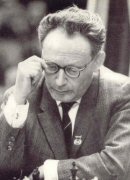
Mikhail Botvinnik
Mikhail Moiseyevich Botvinnik
(Russian: Михаи́л Моисе́евич
Ботви́нник) (August 17 1911 –
May 5, 1995) was the first
world-class player to develop
within the Soviet Union, putting
him under political pressure but
also giving him considerable
influence within Soviet chess.
From time to time he was accused
of using that influence to his
own advantage.
He also played a major role in
the organization of chess,
making a significant
contribution to the design of
the World Chess Championship
system after World War II and
becoming a leading member of the
coaching system that enabled the
Soviet Union to dominate
top-class chess during that
time. One of his famous pupils
was Garry Kasparov.
He first
came to the notice of the chess world at the age of 14, when
he defeated the world champion, José Raúl Capablanca, in a
simultaneous exhibition. He had started playing only two
years earlier. His progress was fairly rapid, mostly under
the training of Soviet Master and coach Abram Model, in
Leningrad. He qualified for his first USSR Championship
final stage in 1927 as the youngest player ever at that
time, tied for 5th place and won the title of National
Master.
He won the Leningrad Masters' tournament in 1930 with 6½/8.
He followed this up the next year by winning the
Championship of Leningrad by 2½
points over former Soviet champion Peter Romanovsky.
At the
age of 20 Botvinnik won his first Soviet Championship at
Moscow 1931, with 13½/17.
In the spring of that year, he graduated in Electrical
Engineering from the Leningrad Polytechnical Institute, and
stayed on there as a post-graduate student. In 1933, he
repeated his Soviet Championship win, this time in his home
city of Leningrad, with 14/19.
Botvinnik
would go on to win a total of six Soviet Championships,
adding further titles in 1939, 1944, 1945, and 1952 (in 1952
he tied with Mark Taimanov and won the play-off match). This
is tied for the most ever with Mikhail Tal. His 1945 win was
with an utterly dominant score of 16/18, one of the top
tournament performances of all time.
The year
1938 brought the famous AVRO tournament in the Netherlands,
which featured the world's top eight players, and may have
been the strongest tournament yet seen – some chess
historians believe that it is the strongest ever held. The
winner was supposed to get a title match with the World
Champion Alexander Alekhine. Botvinnik placed third (behind
Paul Keres and Reuben Fine. Alekhine accepted a challenge
from Botvinnik, but the arrival of World War II prevented a
World Championship match.
In 1941, Botvinnik won a match-tournament designating him
the title of "Absolute Champion of the U.S.S.R". Botvinnik
defeated Paul Keres and future world champion Vasily
Smyslov, amongst other strong Soviet grandmasters such as
Isaac Boleslavsky, Igor Bondarevsky, and Andor Lilienthal,
to win the title. Chess historians debate whether this
constitutes an official Soviet Championship title.
When the Second World War ended, Botvinnik won the first
really strong post-war tournament, at Groningen 1946, with
14½/19, half a point ahead of former World Champion Max
Euwe; this was Botvinnik's first non-shared first place in a
tournament outside the Soviet Union, and Smyslov was a
strong third. Botvinnik also won the very strong Mikhail
Chigorin Memorial tournament held at Moscow 1947.
Botvinnik strongly influenced the design of the system which
would be used for World Championship competition from 1948
to 1963. Viktor
Baturinsky
wrote, in his introduction to Botvinnik's own book
Botvinnik's Best Games 1947–1970 (page 2), "Now came
Botvinnik's turn to defend his title in accordance with the
new qualifying system which he himself had outlined in
1946."
 |
|
|
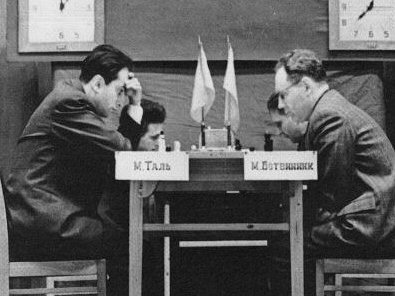
Tal v
Botvinnik, Moscow 1960 |
|
Botvinnik
then held the title, with two brief interruptions, for the
next fifteen years, during which he played seven world
championship matches. In 1951, he drew with David Bronstein
over 24 games in Moscow, +5 =14 -5, keeping the world title;
but it was
a struggle for Botvinnik, who won the second-last game and
drew the last in order to tie the match. In 1954, he drew
with Vasily Smyslov over 24 games at Moscow, +7 =10 -7,
again keeping the title. In 1957 he lost to Smyslov by 9½–12½
in Moscow, but the rules allowed him a rematch without
having to go through the Candidates' Tournament, and in 1958
he won the rematch in Moscow; Smyslov said his health was
poor during the return match.
In 1960
Botvinnik was convincingly beaten by the 23-year old Mikhail
Tal, by 8½-12½ at Moscow; but again he exercised his right
to a rematch in 1961, and won by 13–8 in Moscow.
Commentators agreed that Tal's play was weaker in the
rematch, probably due to his health, but also that
Botvinnik's play was better than in the 1960 match, largely
due to thorough preparation; and Botvinnik changed his
style, avoiding the tactical complications in which Tal
excelled and aiming for endgames, where Tal's technique was
not outstanding. Finally, in 1963, he lost the title to
Tigran Petrosian, by 9½-12½ in Moscow. FIDE had by then
altered the rules, and he was not allowed a rematch. The
rematch rule was nicknamed the 'Botvinnik rule', because he
twice benefited from it.
Botvinnik
gained a doctorate in engineering in 1951. As an electrical
engineer, he was one of the very few famous chess players
who achieved distinction in another career while playing
top-class competitive chess.
Botvinnik
won the 1952 Soviet Championship (tied with Taimanov in the
tournament, won the play-off match). He included several
wins from that tournament over the 1952 Soviet team members
in his book Botvinnik's Best Games 1947–1970, writing "these
games had a definite significance for me". In 1956 he tied
for first place with Smyslov in the 1956 Alexander Alekhine
Memorial in Moscow.
Botvinnik
was selected for the Soviet Olympiad team from 1954 to 1964
inclusively, and helped his team to gold medal finishes each
of those six times. At Amsterdam 1954 he was on board one
and won the gold medal with 8⅓/11. Then at home for
Moscow 1956, he was again board one, and scored 9⅓/13 for
the bronze medal. For Munich 1958, he
scored 9/12 for the silver medal on board one. At Leipzig
1960, he played board two behind Mikhail Tal, having lost
his title to Tal earlier that year; But he won the board two
gold medal with 10⅓/13. He was back on board one for
Varna 1962, scored 8/12, but
failed to win a medal for the only time at an Olympiad. His
final Olympiad was Tel Aviv 1964, where he won the bronze
with 9/12, playing board 2 as he had lost his title to
Petrosian. Overall, in six Olympiads, he scored 54½/73 for
an outstanding 74.0 per cent.
Botvinnik
also played twice for the USSR in the European Team
Championship. At Oberhausen 1961, he scored 6/9 for the gold
medal on board one. But at Hamburg 1965, he struggled on
board two with only 3½/8. Both times the Soviet Union won
the team gold medals. Botvinnik played one of the final
events of his career at the Russia (USSR) vs Rest of the
World match in Belgrade 1970, scoring 2½/4 against Milan
Matulovic, as the USSR narrowly triumphed.
He retired from competitive play in 1970 aged 59, preferring
instead to occupy himself with the development of computer
chess programs and to assist with the training of younger
Soviet players, earning him the nickname of "Patriarch of
the Soviet Chess School".
Botvinnik sent an effusive telegram of thanks to Stalin
after his victory at the great tournament in Nottingham in
1936. Many years later he said that it had been written in
Moscow and that KGB agents told him to sign it.
Since Keres lost his first four games against Botvinnik in
the 1948 World Championship tournament, suspicions are
sometimes raised that Keres was forced to "throw" games to
allow Botvinnik to win the Championship. Chess historian
Taylor Kingston investigated all the available evidence and
arguments, and concluded that: Soviet chess officials gave
Keres strong hints that he should not hinder Botvinnik's
attempt to win the World Championship; Botvinnik only
discovered this about half-way through the tournament and
protested so strongly that he angered Soviet officials.
Bronstein insinuated that Soviet officials pressured him to
lose in the 1951 world championship match so that Botvinnik
would keep the title. But comments by Botvinnik's second
Salo Flohr and Botvinnik's own annotations about the
critical 23rd game indicate that Botvinnik knew of no such
plot.
While there is no doubt that Botvinnik sincerely believed in
Communism, he by no means followed the party line
submissively. For example in 1948 he publicly supported the
founding of the state of Israel – although he later made a
distinction between the "hard-working Jews and Arabs living
in this wonderful country" and "the Arab petrol tycoons and
the wealthy American Jews". In 1954 he wrote an article
about inciting socialist revolution in western countries,
aiming to spread Communism without a third world war. And in
1960 Botvinnik wrote a letter to the Soviet Government
proposing economic reforms that were contrary to party
policy.
In 1976 Soviet grandmasters were asked to sign a letter
condemning Viktor Korchnoi as a "traitor" after Korchnoi
defected. Botvinnik evaded this "request" by saying that he
wanted to write his own letter denouncing Korchnoi. But by
this time his importance had waned and officials would not
give him this "privilege", so Botvinnik's name did not
appear on the group letter – an outcome Botvinnik may have
foreseen. David Bronstein and Boris Spassky openly refused
to sign the letter.
980 Botvinnik games in
PGN.
Max Euwe
Machgielis (Max) Euwe (May 20,
1901 – November 26, 1981) was a
Dutch chess Grandmaster,
Mathematician, and author. He
was the fifth player to become
World Chess Champion
(1935–1937).
Euwe was
born in Watergraafsmeer, near Amsterdam. He studied
mathematics at the University of Amsterdam, earning his
doctorate in 1926, and taught mathematics, first in
Rotterdam, and later at a girls' Lyceum in Amsterdam. He
published a mathematical analysis of the game of chess from
an intuitionistic point of view, in which he showed, using
the Thue-Morse sequence, that the then current official
rules did not exclude the possibility of infinite games.
Euwe won
every Dutch chess championship that he participated in from
1921 until 1952, and additionally won the title in 1955 -
his 12 titles are still a record. The only other winners
during this period were Salo Landau in 1936, when Euwe, then
world champion, did not compete, and Jan Hein Donner in
1954. He became the world amateur chess champion in 1928, at
The Hague, with a score of 12/15.
At Zürich
1934, Euwe finished second, behind only World Champion
Alexander Alekhine, and he defeated Alekhine in their game.
Alekhine was in an eight-year stretch, from 1927-35, where
he lost only six games in tournament play.
On
December 15, 1935 after 30 games played in 13 different
cities around The Netherlands over a period of 80 days, Euwe
defeated Alekhine, by 15½-14½, becoming the fifth World
Chess Champion. Alekhine quickly went two games ahead, but
from game 13 onwards Euwe won twice as many games as
Alekhine. His title gave a huge boost to chess in The
Netherlands. This was also the first world championship
match in which the players had seconds to help them with
analysis during adjournments.
Euwe's
performances in the great tournaments of Nottingham 1936 and
the 1938 AVRO tournament indicate he was a worthy champion,
even if he was not as dominant as the earlier champions but
lost the title to Alekhine in a rematch in 1937, also played
in The Netherlands, by a rather one-sided margin of 15½-9½.
He played
a match with Paul Keres in The Netherlands in 1939-40,
losing 6½-7½.
After
Alekhine's death in 1946, Euwe was considered by some to
have a moral right to the position of world champion, based
at least partially on his clear second place finish in the
great tournament at Groningen in 1946, behind Mikhail
Botvinnik. But Euwe consented to participate in a
five-player tournament to select the new champion, the World
Chess Championship 1948. However at 47, Euwe was
significantly older than the other players, and well past
his best, and he finished last.
He played
for The Netherlands in a total of seven chess Olympiads,
from 1927 to 1962, a 35-year-span, always on first board. He
scored 10½/15 at London 1927, 9½/13 at Stockholm 1937 for a
bronze medal, 8/12 at Dubrovnik 1950, 7½/13 at Amsterdam
1954, 8½/11 at Munich 1958 for a silver medal at age 57,
6½/16 at Leipzig 1960, and finally 4/7 at Varna 1962. His
aggregate was 54½/87 for 62.6 per cent.
From 1970
(when he was 69 years old) until 1978, he was president of
the FIDE. As president Euwe usually did what he considered
morally right rather than what was politically expedient. On
several occasions this brought him into conflict with the
Soviet Chess Federation, which thought it had the right to
call the shots because it contributed a very large share of
FIDE's budget.
Euwe lost
some of the battles with the Soviets. For example in 1973 he
accepted the Soviets' demand that Bent Larsen and Robert
Hübner, the two strongest non-Soviet contenders (Fischer was
now champion), should play in the Leningrad Interzonal
tournament rather than the weaker one in Petropolis.
Unsurprisingly Larsen and Hübner were eliminated from the
competition for the World Championship because Korchnoi and
Karpov took the first 2 places at Leningrad. Some
commentators have also questioned whether Euwe did as much
as he could have to prevent Fischer from forfeiting his
world title in 1975.
He died in
1981, age 80, of a heart attack. Revered around the chess
world for his many contributions, he had
travelled extensively while FIDE President, bringing many new
members into the organization.
1400 Euwe
games in PGN.
Alexander Alekhine
Alexander Alekhine (1892 - 1946) was born in Moscow. He was
the son of wealthy parents. At the age of eleven his mother
taught him to play chess and he soon developed a great
passion for the game.
His first chess achievement was when, at the age of
seventeen, he won the All-Russian Amateur Tournament in St.
Petersburg (+12 -2 =2). He was awarded a national master
title for this performance. The tournament was held
concurrently with the more famous international event won by
Emanuel Lasker and
Akiba
Rubinstein. Meanwhile, in the United States, later
that year a 23 year old Cuban
called
José
Raúl Capablanca shocked American chess players by
easily beating
Frank
Marshall in a match.
In 1914, after Alekhine finished
3rd behind Lasker and Capablanca
in a tournament in St
Petersburg, Tsar Nicholas II
named him as one of the five
original grandmasters. Alekhine
also served in World War 1, and
was wounded. He then lived in
many countries, speaking
Russian, French, German, and
English.
Following the Russian Revolution, in 1919 he was suspected
of espionage, arrested and imprisoned in Odessa, though he
was eventually freed. He won the 1st USSR Championship in
1920. In 1921 Alekhine left Soviet Russia never to return,
moving to France, where four years later he became a French
citizen and entered the Sorbonne Faculty of Law. Although
his thesis on the Chinese prison system went uncompleted, he
nevertheless claimed the title of "Dr Alekhine". From 1921
to 1927, Alekhine amassed an excellent tournament record,
winning or sharing 12 out of 20 first prizes in the
tournaments he played.
In 1927 he won the World chess championship
against Capablanca, to the surprise of almost all the
chess world. After that, if Capablanca was invited to
tournaments, Alekhine would insist on greater money;
otherwise he would refuse to play. Although Capablanca was
clearly the leading challenger, Alekhine carefully avoided
granting a rematch, although a right to a rematch was part
of the agreement. Instead, he played matches with Efim
Bogoljubow in 1929 and 1934, winning easily both times.
After defeating Capablanca, Alekhine dominated chess for
some time. He lost only 7 out of 238 games in tournament
play from 1927 - 1935.
In 1935 he carelessly lost the title to Max Euwe. The loss
is largely attributed to Alekhine's alcoholism and lack of
preparation. At the great Nottingham tournament in 1936 he
also lost his game against Capablanca who went on to win the
tournament (tied with Mikhail Botvinnik). Alekhine
gave up alcohol and regained the title from Euwe in
1937
by a large margin. He played no more title matches, so he
held the title until his death. While planning for a World
championship match against Botvinnik, he died in his hotel
room in
Estoril,
Portugal. His death, the circumstances of which are
still disputed, is thought to have been caused either by his
choking on a piece of meat or by a heart attack. His burial
was sponsored by
FIDE,
and the remains were transferred to the Cimetière du
Montparnasse,
Paris,
France in 1956.
2079
Alekhine games in
PGN.
Richard
Réti
Richard Réti (28 May 1889,
Pezinok
(now Slovakia) - 6 June 1929, Prague) was a Czechoslovakian
chess player, although he was born in Pezinok which at the time was in
Hungary. He studied mathematics and physics at Vienna, where he found
the time to hone his chess skills, and shortly before the First World
War became a chess professional.
He earned his living partly by
writing chess columns and giving displays; in particular he was
expert at blindfold chess. He was one of the top players in the world
during the 1910s and 1920s and began his career as a fiercely
combinative classical player, favouring openings such as the King's
Gambit (1. e4 e5 2. f4).
However, after the end of the First World War, his playing
style underwent a radical change, and he became one of the
principal proponents of hypermoderism, along with Aron
Nimzowitsch and others. Indeed, with the notable exception
of Nimzowitsch's acclaimed book My System, he is considered
to be the movement's foremost literary contributor. The Réti
Opening (1. Nf3 d5 2. c4), with which he famously defeated
the world champion José Raúl Capablanca in New York in 1924
- Capablanca's first defeat for eight years and the first
since becoming World Champion - is named after him. He was
also a notable composer of endgame studies creating simple
and natural-looking positions that would appeal to the
majority of players. In 1925 Réti set the world record for
blindfold chess with twenty-nine games played
simultaneously. He won twenty-one of these, drew six and
only lost two! His writings have also become 'classics' in
the chess world. 'New Ideas in Chess' from 1922 and 'Masters
of the Chessboard' from 1930 published after his death, are
still studied today.
As a cultured and educated man, Réti regarded chess as an
art, and his books, in the eyes of many chess enthusiasts,
reveal the hand of an artist. However, lacking adequate sources Réti was
unaware that some positional ideas were known earlier than
he supposed, and he failed to mention the contributions made
by Staunton, Paulsen and Chigorin.
He died on June 6, 1929 in Prague of scarlet fever aged just
40.
698 Réti
games in PGN.
José Raúl Capablanca
José Raúl Capablanca (November 19, 1888 - March 8, 1942).
Referred to by many chess historians as the Mozart
of chess, Capablanca was a chess prodigy whose brilliance
was
noted at an early age. In 1901, at the age of 12, he
defeated Cuban national champion Juan Corzo by the score of
4 wins, 3 losses, and 6 draws.
In 1909, at the age of 20,
Capablanca won a match against
US champion Frank Marshall. In
1911, Capablanca challenged
Emanuel Lasker for the world
championship. Lasker accepted
his challenge but proposed
seventeen conditions for the
match. Capablanca disapproved of
some of the conditions and the
match did not take place.
In 1914 he
beat Bernstein in Moscow in a game listed in many
anthologies as a brilliancy for the winning move ...Qb2!!
and for the new strategy with hanging pawns, and defeated
Nimzowitsch in an elegant opposite-coloured bishop endgame.
At the great 1914 tournament in St. Petersburg, with most of
the world's leading players, Capablanca met Lasker across
the chessboard for the first time in normal tournament play
(Capablanca had won a knock-out lightning chess final game
in 1906, leading to a famous joint endgame composition).
Capablanca took the large lead of one and a half points in
the preliminary rounds, and made Lasker fight hard to draw.
He again won the first brilliancy prize against Bernstein
and had some highly regarded wins against David Janowsky,
Nimzowitsch and Alekhine. Capablanca finished second to
Lasker with a score of 13 points to Lasker's 13½, but ahead
of third-placed Alexander Alekhine.
In 1920,
Lasker saw that Capablanca was becoming too strong, and
resigned the title to him, saying, "You have earned the
title not by the formality of a challenge, but by your
brilliant mastery." The new world champion dominated the
field at London, 1922. There were an increasing number of
strong chess players and it was felt that the world champion
should not be able to evade challenges to his title, as had
been done in the past. Capablanca was second behind Lasker
in New York 1924, and again ahead of third-placed Alekhine.
He was third behind Efim Bogoljubov and Lasker in Moscow
1925. But he dominated the 6-player match tournament in New
York 1927, not losing a game and 2½ points ahead of
Alekhine.
Capablanca
had overwhelming success in New York 1927, a quadruple-round
robin with six of the world's top players. He was undefeated
and 2½ points ahead of the second-placed Alekhine.
Capablanca also defeated Alekhine in their first game, won
the first brilliancy prize against Rudolf Spielmann and won
fine two games against Aron Nimzowitsch.
This made
him the prohibitive favourite for his match with Alekhine,
who had never defeated him, later that year. However, the
challenger had prepared well, and played with patience and
solidity, and the marathon match proved to be Capablanca's
undoing. Capablanca lost the first game in very lacklustre
fashion, then took a narrow lead by winning games 3 and 7 -
attacking games more in the style of Alekhine - but then
lost games 11 and 12. He tried to get Alekhine to annul the
match when both players were locked in a series of draws.
Alekhine refused, and eventually prevailed +6 -3 =25.
In 1934,
Capablanca resumed serious play. He had begun dating Olga
Chagodayev, whom he married in 1938, and she inspired him to
play again. In 1935, Alekhine, plagued by problems with
alcohol, lost his title to Euwe. Capablanca had renewed
hopes of regaining his title, and he won Moscow 1936, ahead
of Botvinnik and Lasker. Then he tied with Botvinnik in the
super-tournament of Nottingham 1936, ahead of Euwe, Lasker,
Alekhine, and the leading young players Reuben Fine, Samuel
Reshevsky (avenging a defeat here) and Salo Flohr.
This was Capablanca's first game with Alekhine since their
great match, and the Cuban did not miss his chance to avenge
that defeat. He had the worse position, but caught Alekhine
in such a deep trap, allowing him to win the exchange, that
none of the other players could work out where Alekhine went
wrong, except Lasker who immediately saw the mistake.
Capablanca's health took a turn for the worse. He suffered a
small stroke during the AVRO tournament of 1938, and had the
worst result of his career, 7th out of 8. But even at this
stage of his career he was capable of producing strong
results. In the 1939 Chess Olympiad in Buenos Aires, he made
the best score on top board for Cuba, ahead of Alekhine and
Paul Keres.
On 7 March 1942, he was happily kibitzing a skittles game at
Manhattan Chess Club in New York when he collapsed from a
stroke. He was taken to Mount Sinai hospital, where he died
the next morning.
1195
Capablanca games in
PGN.
Aron
Nimzowitsch
Aron
Nimzowitsch (November 9, 1886, Riga - March 16, 1935,
Denmark) was a grandmaster
of considerable strength and a very influential chess
writer. He was the foremost figure amongst the hypermoderns.
Nimzowitsch came from a wealthy
Jewish family and learned chess
from his father. He travelled to
Germany in 1904 to study
philosophy, but began a career
as a professional chess player
that same year. After tumultuous
years during and after World War
I, Nimzowitsch moved to
Copenhagen in 1922 (some sources
say 1920) and lived there until
his death. He is buried in
Bispebjerg Cemetery in
Copenhagen.
At the
height of his career, Nimzowitsch was the third best player
in the world, immediately behind Alekhine and Capablanca.
His most notable successes were first place finishes at
Copenhagen 1928, the Carlsbad tournaments of 1929 and second
place behind Alekhine at San Remo in 1930. Nimzowitsch never
developed a knack for match play though; his best match
success was a draw with Alekhine (though this match was only
three games long and was in 1914, 13 years before Alekhine
became world champion). Although Nimzowitsch did not win a
single game against Capablanca, he fared better against
Alekhine.
He wrote
three books on chess strategy: Mein System (My System)
(1925), Die Praxis meines System (The Practice of my System)
(commonly known as Chess Praxis), and Die Blockade (The
Blockade). The last of these is hard to find in English,
however, and much that is in it is covered again in Mein
System. It is said that 99 out of 100 chess masters have
read Mein System; consequently, most consider My System to
be Nimzowitsch's greatest contribution to chess. It sets out
Nimzowitsch's most important ideas while his second most
influential work, Chess Praxis, elaborates upon these ideas,
adds a few new ones, and has immense value as a stimulating
collection of Nimzowitsch's own games even when these games
are more entertaining than instructive.
Nimzowitsch's chess theories flew in the face of
pre-existing convention. While there were those like
Alekhine, Lasker, and even Capablanca who did not live by
Tarrasch's rigid teachings, the acceptance of Tarrasch's
ideas, all simplifications of the more profound Steinitz,
was nearly universal. That the centre had to be controlled
by pawns and that development had to happen in support of
this control — the core ideas of Tarrasch's chess
philosophy—were things every beginner thought to be
irrefutable laws of nature like gravity.
Nimzowitsch shattered these assumptions. He discovered such
concepts as overprotection (the least important of his ideas
from a modern standpoint though still interesting and
sometimes applicable), control of the center by pieces
instead of pawns, blockade, prophylaxis — playing to prevent
the opponent's plans — and the fianchetto (in the case of
the fianchetto, one could argue that it was a rediscovery,
but Nimzowitsch certainly refined its use). He also
formalised strategies using open files, outposts and
invasion of the seventh rank, all of which are widely
accepted today.
Many chess
openings and variations are named after him, the most famous
being the Nimzo-Indian Defence (1.d4 Nf6 2.c4 e6 3.Nc3 Bb4)
and the less often played Nimzowitsch Defence (1.e4 Nc6).
Both of these exemplify Nimzowitsch's ideas about
controlling the center with pieces instead of pawns. He was
also vital in the development of two French Defense systems,
the Winawer Variation (in some places called the Nimzowitsch
Variation; its moves are 1. e4 e6 2. d4 d5 3. Nc3 Bb4) and
the Advance Variation (1. e4 e6 2. d4 d5 3. e5).
There are
numerous entertaining anecdotes regarding Nimzowitch - some
more savoury than others. For example, he once missed the
first prize by losing to Sämisch; immediately upon learning
this, Nimzowitsch got up on a table and shouted, “Why must I
lose to this idiot?”
556 Nimzowitsch
games in
PGN.
Harry Nelson Pillsbury
Harry Nelson Pillsbury (December 5, 1872 - June 17, 1906)
was United States Chess Champion
from 1897 until his death in 1906. Pillsbury was born in
Somerville, Massachusetts, moved to New York City in 1894
and then again to Philadelphia in 1898.
By 1890, having only played
chess for two years he beat
noted chess expert H. N.
Stone. In April 1892, Pillsbury
played a match against World
Champion Wilhelm Steinitz,
(giving Pillsbury a pawn
advantage). Pillsbury won 2 - 1.
His rise was meteoric, and there
was soon no one to challenge him
in the New York chess scene.
The Brooklyn chess club sponsored his journey to Europe to
play in the Hastings 1895 chess tournament, in which all the
greatest players of the time participated. The 22-year-old
Pillsbury became a celebrity in the United States and abroad
by winning the tournament, finishing ahead of reigning world
champion Lasker and former world champion Steinitz and his
recent challenger
Mikhail Chigorin who was second. The dynamic style that
Pillsbury exhibited during the tournament also helped to
popularize the Queen's Gambit during the 1890s, including a
famous win over the powerful Siegbert Tarrasch in Hastings
1895.
His next big tournament was in St. Petersburg the same year,
where he appears to have contracted syphilis prior to the
start of the event. Although he was in the lead after the
first half of the tournament, he was affected by severe
headaches in the second, and lost no less than six games,
ultimately finishing third.
Pillsbury had an even record against Lasker (+5-5=4). He
even beat Lasker with black pieces at St Petersburg in 1895
and at Augsburg in 1900. Pillsbury also had an even score
against Steinitz (+5-5=3) and Tarrasch (+5-5=2),
but a slight minus against Chigorin (+7-8=6) and
surprisingly against Joseph Henry Blackburne (+3-5=4), while
he beat David Janowski (+6-4=2) and Geza Maroczy (+4-3=7)
and crushed Carl Schlechter (+8-2=9).
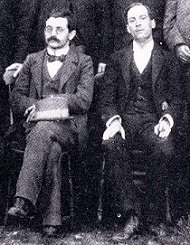 |
|
|
Lasker with Pillsbury,
Hastings 1895 |
|
Pillsbury was a very strong blindfold chess player, and
could play checkers and chess simultaneously while playing a
hand of whist, and reciting a list of long words. His
maximum was 22 simultaneous blindfold games at Moscow 1902.
However, his greatest feat was 21 simultaneous games
against
the players in the Hannover Hauptturnier of 1902—the winner
of the Hauptturnier would be recognized as a master, yet
Pillsbury scored +3-7=11. As a teenager, Edward Lasker
played Pillsbury in a blindfold exhibition in Breslau,
against the wishes of his mother, and recalled in ‘Chess
Secrets I learned from the Masters’,
But it soon became evident that I would have lost my game
even if I had been in the calmest of moods. Pillsbury gave a
marvellous performance, winning 13 of the 16 blindfold
games, drawing two, and losing only one. He played strong
chess and made no mistakes [presumably in recalling the
position]. The picture of Pillsbury sitting calmly in an
armchair, with his back to the players, smoking one cigar
after another, and replying to his opponents' moves after
brief consideration in a clear, unhesitating manner, came
back to my mind 30 years later, when I refereed Alekhine's
world record performance at the Chicago World's Fair, where
he played 32 blindfold games simultaneously. It was quite an
astounding demonstration, but Alekhine made quite a number
of mistakes, and his performance did not impress me half as
much as Pillsbury's in Breslau.
Poor health would prevent him from realizing his full
potential throughout the rest of his life. In spite of this,
Pillsbury beat American champion Jackson Showalter in 1897
to win the U.S. Chess Championship, a title he held
until he succumbed to syphilis in 1906. The stigma
surrounding the disease makes it unlikely that he sought
medical treatment. Some said that Pillsbury ruined his
health by all his blindfold displays, but those critics were
evidently unaware of the fatal organic illness.
Along with Paul Morphy and Bobby Fischer, Pillsbury ranks as
one of the USA's greatest-ever chess players. Unfortunately,
like the former, Pillsbury too had a short career.
425 Pillsbury games in
PGN.
Emanuel Lasker
Emanuel Lasker (December 24, 1868 - January
11, 1941) was a German chess player and
mathematician,
born at Berlinchen in Brandenburg (now Barlinek in Poland).
In 1894 he became the second
World Chess Champion by
defeating Steinitz
with 10 wins, 4 draws and 5
losses. He maintained this title
for 27 years, the longest
unbroken tenure of any
officially recognized World
Champion of chess. His great
tournament wins include London
(1899), St Petersburg (1896 and
1914), New York (1924).
In 1921, he lost the title to Capablanca. He had already
offered to resign to him a year before, but Capablanca
wanted to beat Lasker in a match.
In 1933, the Jewish Lasker and his wife Martha Kohn had to
leave Germany because of the Nazis. They went to England,
and, after a subsequent short stay in
the USSR, they settled in New York.
Lasker is noted for his "psychological" method of play in
which he considered the subjective qualities of his opponent
in addition to the objective requirements of his position on
the board. Richard Reti even speculated that Lasker would
sometimes knowingly choose inferior moves if he knew they
would make his opponent uncomfortable, although Lasker
himself denied this. But, for example, in one famous game
against Capablanca (St. Petersburg 1914) which he needed to
win at all costs, Lasker chose an opening that is considered
to be relatively harmless -- but only if the opponent is
prepared to mix things up in his own turn. Capablanca,
inclined by the tournament situation to play it safe, failed
to take active measures and so justified Lasker's strategy.
Lasker won the game.
One of Lasker's most famous games is Lasker - Bauer,
Amsterdam, 1889, in which he sacrificed both bishops in a
maneuver later repeated in a number of games. Some opening
variations are named after him, for example Lasker's Defense
(1.d4 d5 2.c4 e6 3.Nc3 Nf6 4.Bg5 Be7 5.e3 O-O 6.Nf3 h6 7.Bh4
Ne4) to the Queen's Gambit. In 1895, he introduced a line
that effectively ended the popular Evans Gambit in
tournament play (1.e4 e5 2.Nf3 Nc6 3.Bc4 Bc5 4.b4 Bxb4 5.c3
Ba5 6.d4 d6 7.0-0 Bb6 8.dxe5 dxe5 9.Qxd8+ Nxd8 10.Nxe5 Be6).
Lasker's line curbs White's aggressive intentions, and
according to Reuben Fine, the resulting simplified position
"is psychologically depressing for the gambit player."
Lasker was also a distinguished mathematician. He performed
his doctoral studies at Erlangen from 1900 to 1902 under
David Hilbert. His doctoral thesis, Über Reihen auf der
Convergenzgrenze, was published in Philosophical
Transactions in 1901.
Lasker introduced the concept of a primary ideal, which
extends the notion of a power of a prime number to algebraic
geometry. He is most
famous for his 1905 paper Zur Theorie der Moduln und Ideale,
which appeared in Mathematische Annalen. In this paper, he
established what is now known as the Lasker-Noether theorem
for the special case of ideals in polynomial rings.
He was also a philosopher, and a good friend of Albert
Einstein. Later in life he became an ardent humanitarian,
and wrote passionately about the need for inspiring and
structured education for the stabilization and security of
mankind. He also took up bridge and became a master at it,
in addition to studying Go.
He invented Lasca, a draughts-like game, where instead of
removing captured pieces from the board, they are stacked
underneath the capturer.
The poet Else Lasker-Schüler was his sister-in-law. He was
also related to the chess-player Edward Lasker.
1085
Lasker games in
PGN.
Siegbert Tarrasch
Siegbert Tarrasch (March 5, 1862 - February 17, 1934) was
one of the strongest chess players of the late 19th century
and early 20th century. Tarrasch was Jewish, and a patriotic
German
who lost a son in World War I, but lived to suffer under the
early stages of Nazism.
Tarrasch was a medical doctor by
profession who also may have been
the best player in the world in
the early 1890s. He scored
heavily against the aging
Steinitz in tournaments,
(+3-0=1), but refused an
opportunity to challenge for the
world title because of the
demands of his medical practice.
Soon afterwards, Tarrasch drew a
hard-fought match against his
challenger Mikhail Chigorin in
1893 (+9-9=4). Tarrasch also won
four major tournaments in
succession: Breslau 1889,
Manchester 1890, Dresden 1892
and Leipzig 1894.
However, after Emanuel Lasker became world chess champion in
1894, Tarrasch could not match him. Thereafter Tarrasch
always played the second fiddle. When Lasker finally agreed
to a title match in 1908, he beat Tarrasch convincingly
+8-3=5. However, Tarrasch was still very
powerful during Lasker's reign, demolishing Frank Marshall
in a match in 1905 (+8-1=8), and becoming one of the five
original grandmasters by becoming one of the five finalists
at the very strong St. Petersburg tournament of 1914. This
was probably his swan song, because his chess career was not
very successful after this, although he still played some
highly regarded games. Tarrasch was a well-known chess
writer, and was called Praeceptor Germaniae
meaning "Teacher of Germany". He wrote several books,
including Die moderne Schachpartie and Three
hundred chess games. But until recently, his books had
not been translated into English although his ideas became
famous.
He took Wilhelm Steinitz's ideas (control of the centre,
bishop pair, space advantage) to a higher level of
refinement. He emphasized piece mobility much more than
Steinitz did, and disliked cramped positions, saying that
they "had the germ of defeat". Tarrasch stated what
is known as the Tarrasch rule that rooks should be placed
behind passed pawns — either yours or your opponent's. A
number of chess openings are named after Tarrasch, with the
most notable being: The Tarrasch Defense, Tarrasch's
favorite line against the Queen's Gambit. The Tarrasch
Variation of the French Defense (3.Nd2), which Tarrasch
considered refuted by 3...c5.
772
Tarrasch games in
PGN.
Mikhail
Chigorin
Mikhail Chigorin (12 November
1850 - 25 January 1908) was a leading Russian chess player
and the first grandmaster from Russia. He served as a major
source of inspiration
for the "Soviet school of
chess," which dominated the chess world in the latter part
of the 20th century. He played two matches against Wilhelm
Steinitz for the World Chess Championship; the first in 1889
he lost 10½–6½;
the second in 1892 he lost 12½–10½.
His overall record against Steinitz was respectable:
+24-27=8.
He drew a match with Siegbert Tarrasch in Saint Petersburg
in 1893 (+9-9=4). He had a narrow lifetime plus score of
+14-13=8.
Chigorin started serious chess rather late in life, and his
first international tournament
was Berlin 1881, where he was 3rd=.
He came second, ahead of reigning world champion Lasker and
former world champion Steinitz, in the Hastings 1895 chess
tournament, in which all the greatest players of the time
participated. The winner, Harry Nelson Pillsbury, lost their
individual game and had great respect for Chigorin's
ability. Chigorin maintained a narrow lifetime plus score
against him (+8-7=6).
He was 2nd= in Budapest 1896, and beat Rudolf Charousek +3-1
in the playoff. He was skilled at gambits, and won the
Vienna King's Gambit Tournament in 1903. He also beat Lasker
+2-1=3 in a sponsored Rice Gambit tournament in Brighton,
where he took black in every game; neither player took the
result as reflecting chess strength as opposed to the
weakness of the gambit.
Chigorin has several chess openings named after him, most
notably the Chigorin Variation of the Ruy Lopez (in
algebraic notation, 1.e4 e5 2.Nf3 Nc6 3.Bb5 a6 4.Ba4 Nf6
5.O-O Be7 6.Re1 b5 7.Bb3 d6 8.c3 O-O 9.h3 Na5). There is
also the Chigorin Defense to the Queen's Gambit (1.d4 d5
2.c4 Nc6).
Although Chigorin had a heavily negative record against
Lasker (+1-8=4), he beat Lasker with the black pieces in
their first game at Hastings in 1895. It resulted in a
classic two knights v two bishops ending, where Lasker's
bishops were better but he underestimated Chigorin's
strategy.
Chigorin had the measure of Richard Teichmann (+8-3=1) but
couldn't handle David Janowski (+4-17=4).
A famous Chigorin's match played against Wilhelm Steinitz in
1892 is used as the base for the plot of The Squares of the
City, a 1978 science-fiction novel by John Brunner.
770 Chigorin games in
PGN.
Amos Burn
Amos Burn (1848 - 1925) was one
of the world's top ten players
at the end of the 19th century.
Born in Hull, he learned chess
aged 16, came to London at the
age of 21, and rapidly
established himself as a leading
English player. He was a member
of the
Liverpool
Chess
club from 1867 until his death,
serving as its president for
many years. For a time he also
lived in
Hoylake, Wirral.
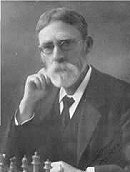 |
|
|
|
|
A pupil of Steinitz, he
developed a similar style; both
he and his master were among the
world's best six defensive
players, according to
Nimzovitsch. Not wishing to
become yet another impoverished
professional, Burn decided to
put his work (first a cotton
broker then a sugar broker)
before his chess, and he
remained an amateur. He made
several long visits to America,
and was often out of practice
when he played serious chess.
Until his thirty-eighth year he
played infrequently and only in
national events, always taking
first or second prize. From 1886
to 1889 he played more often. In
1886 he drew matches with Bird
(+9 -9) and Mackenzie (+4=2-4);
at London 1887 he achieved his
best tournament result up to
this time, first prize (+8- 1)
equal with Gunsberg (a play-off
was drawn + 1 =3- 1); and at
Breslau 1889 he took second
place after Tarrasch ahead of
Gunsberg. After an isolated
appearance at Hastings 1895 he
entered another spell of chess
activity, 1897-1901. The best
achievement of his career was at
Cologne 1898, first prize (+ 9 =
5 - 1) ahead of Charousek,
Chigorin, Steinitz, Schlechter,
and Janowski. At Munich 1900 he
came fourth (+9=3-3). His last
seven international tournaments
began with Ostend 1905 and ended
with Breslau 1912.
A comparative success, in view
of his age, was his fourth prize
shared with Bernstein and
Teichmann after Schlechter,
Maroczy, and Rubinstein at
Ostend 1906; 36 players competed
in this five-stage event, 30
games in all for those who
completed the course. Retired
from both business and play he
made his home in London and
edited the chess column of The
Field from 1913 until his death.
A shy and retiring man, a loyal
companion to those who came to
know him, he freely gave advice
to young and aspiring players.
Burn had a plus record against Alekhine,
beating him in Karlsbad 1911. Burn is the
eponym of the Burn Variation of the French
Defence (1.e4 e6 2.d4 d5 3.Nc3 Nf6 4.Bg5
dxe4). He was not the first to play the line
(according to Forster's biography, he first
adopted it against Charles D. Locock at
Bradford 1888, which postdates
Anderssen-Clerc, Paris 1878, for example),
but he was the first prominent player to do
so with any frequency.
Read more about Burn and others
at the
Museum of Liverpool Life
411 Burn games in
PGN
Joseph
Henry Blackburne
Joseph Henry Blackburne
(1841–1924), nicknamed "Black
Death", dominated the British
chess world during the latter
part
of
the 19th century. He learnt the
game at the relatively late age
of 18 but quickly went on to
develop a chess career that
spanned over 50 years. At one
point he was number two in the
world with a string of
tournament victories behind him
but he really enjoyed
popularising chess by giving
simultaneous and blindfold
displays around the country.
Blackburne
was born in Manchester in December of 1841. He first learnt
how to play draughts as a child and it wasn't until he heard
about Paul Morphy's exploits around Europe that he switched
to playing chess. He joined the Manchester Chess Club around
1860 and learned a lot about endgame theory from Bernhard
Horwitz, who had been appointed the resident chess
professional in 1857.
For the
next 20 years Blackburne toured the globe playing the greats
of world chess. He was regularly in the top 5 of the world
rankings and performed well in many international
tournaments. He was 1st= with Wilhelm Steinitz in Vienna,
1873, although he lost the playoff (-2); 1st in London,
1876; 1st with Berthold Englisch and Adolf Schwarz in
Wiesbaden, 1880; 1st in Berlin, 1881, where he finished 3
points ahead of his great rival Johannes Zukertort; 1st=
with James Mason in Belfast, 1892 and 1st at the London
tournament of 1893.
His results were decidedly mixed when he turned his talents
to matchplay though and he found it tough going against the
very best in the world. He lost two matches to Steinitz in
1862 (+1, -7, =2) and 1876 (+0, -7, =0) and lost a match to
Emanuel Lasker in 1892 (+0, -6, =4). He did better against
Zukertort; after losing a first match in 1881 (+2, -7, =5)
he managed to win the second in 1887 (+5, -1, =7) and he
performed similarly against Isidor Gunsberg in the same
years - winning in 1881 (+7, -4, =3) but losing the return
in 1887 (+2, -5, =6).
The 1876 match against Wilhelm Steinitz was held at the
West-end Chess Club in London and it was considered at the
time to be an unofficial world championship match. The
stakes were £60 a side with the winner taking all. This was
a considerable sum of money in Victorian times - £60 in
those days would be roughly equivalent to £4,000 in today's
money.
Blackburne made most of his money from touring the country
giving simultaneous exhibitions and blindfold displays.
Indeed he even visited the North-east of England in 1889 to
help promote the newly formed Teesside Chess Association.
Blackburne visited the area for two simultaneous displays
and a blindfold event. He charged 1/- for a simultaneous
game or 2/6d to play him blindfold and he proved to be
virtually unbeatable, winning 29, drawing 2 and losing only
one of the simultaneous games. In the blindfold he won 7 and
drew 1 with 0 losses.
His fondness for drinking whisky at the board once led him
to down an opponent's glass. Shortly afterwards, the
opponent resigned, leading him to quip, "My opponent left a
glass of whisky en prise and I took it en passant".
Blackburne held that drinking whisky cleared his brain and
improved his chessplay, and he tried to prove this theory as
often as possible.
The dubious chess opening the Blackburne Shilling Gambit
(1.e4 e5 2.Nf3 Nc6 3.Bc4 Nd4?!) has been named for
Blackburne because he purportedly used it to win quickly
against amateurs, thus winning the shilling wagered on the
game. This has been questioned by Bill Wall, who says that
the phrase seems to have originated in the second (1992)
edition of Hooper and Whyld's The Oxford Companion to Chess,
and that there is no record of any games Blackburne played
with this opening.
By the 1890s Blackburne
was reputedly playing over 2,000 games a year in simuls and
he had even travelled abroad to countries like the
Netherlands, Australia and New Zealand to give exhibitions.
However he still had time to marry twice and with his second
wife, Mary Fox, he had a son. In addition he played top
board for the British team in 11 of the Anglo-American cable
matches which commenced in 1896 and in the first six matches
he recorded a score of 3½-2½ against the top American, Harry
Pillsbury.
In 1914 he tied for the British Championship with F.D. Yates
but at the age of 72 his best days were behind him and ill
health prevented him from contesting the play-off for the
title. Earlier in the same year he had competed in his last
major international tournament in St Petersburg, where he
beat the up-and-coming Aaron Nimzowitsch, but by now he was
concentrating on writing his chess column for The Field, a
position he held up until his death in 1924 at the age of
82.
Joseph Henry Blackburne is an icon of Romantic chess because
of his wide open and highly tactical style of play. His
large black beard together with his aggressive attacking
style earned him the nickname of 'der Schwarze Tod' (the
Black Death, referencing the plague of the same name) after
his performance in the 1873 Vienna tournament. In 1881,
according to one retroactive rating calculation (see
www.chessmetrics.com),
he was the second highest-ranked player in the world. He was
especially strong at endgames and had a great combinative
ability which enabled him to win many brilliancy prizes but
he will be best remembered for his popular simultaneous and
lightning displays which captured the imagination of the
general public who flocked to watch him.
871 Blackburne games
in PGN
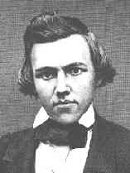
Paul
Morphy
Paul
Charles Morphy (June 22, 1837 - July 10, 1884), "The Pride
and Sorrow of Chess," was an American chess player. He is
considered to have been the greatest chess master of
his time,
and was unofficial World Chess Champion.
Morphy was born in New Orleans,
Louisiana to a wealthy and
distinguished family. His
father, Alonzo Michael Morphy,
was a lawyer, state
legislator, state attorney
general, and state Supreme Court
Justice of Louisiana. Alonzo was
of Portuguese, Irish, and
Spanish ancestry. Morphy's
mother, Louise Therese Felicite
Thelcide Le Carpentier, was the
musically talented daughter of a
prominent French Creole family.
Morphy grew up in an atmosphere
of genteel civility and culture
where chess and music were the
typical highlights of a Sunday
home gathering.
In 1850, the strong professional Hungarian chess master
Johann Löwenthal visited New Orleans, and could do no better
than the amateur General Scott could. Morphy was 12 when he
encountered Löwenthal. Löwenthal, who had played young
talented players before and expected to easily overcome
Morphy, considered the informal match a waste of time but
accepted the
offer as a courtesy to the well-to-do Judge. When Löwenthal
met him, he patted him on the head in a patronizing manner.
He expected no more from Morphy than the usual talented
young players he had played before.
After 1850, Morphy did not play much chess for a long time.
Studying diligently, he graduated from Spring Hill College
in Mobile, Alabama in 1854. He then stayed on an extra year,
studying mathematics and philosophy. He was awarded a degree
with the highest honours.
Seeking new opponents and now aware that Staunton had no
real desire to play, Morphy then crossed the English Channel
and visited France. There he went to the Café de la Regence
in Paris, which was the centre of chess in France. He played
a match against Daniel Harrwitz, the resident chess
professional, and soundly defeated him.
In Paris he suffered from a bout of intestinal influenza and
came down with a high fever. Despite his illness Morphy
insisted on going ahead with a match against the visiting
German champion Adolf Anderssen and triumphed easily,
winning seven while losing two, with two draws in 1858. When
asked about his defeat, Anderssen claimed to be out of
practice, but also admitted that Morphy was in any event the
stronger player and that he was fairly beaten. Anderssen
also attested that in his opinion, Morphy was the strongest
player ever to play the game, even stronger than the famous
French champion Bourdonnais.
It was while he was in Paris in 1858 that Morphy played a
well-known game at the Italian Opera House in Paris, against
the Duke of Brunswick and Count Isouard.
Shortly after, Morphy started the long trip home, taking a
ship back to New York. At the University of the City of New
York, on May 29, 1859,
John Van Buren, son of President Van Buren, ended a
testimonial presentation by proclaiming, "Paul Morphy, Chess
Champion of the World".
Morphy reportedly declared that he would play no more
matches with anyone unless he was giving odds of pawn and
move. After returning to his home, he declared himself
retired from the game, and with a few exceptions, he gave up
the public playing of the game for good.
Morphy's final years were tragic. Depressed, he spent his
last years wandering around the French Quarter of New
Orleans, talking to people no one else could see, and having
feelings of persecution. He was found dead in his bath on
the afternoon of July 10, 1884 by his mother. The doctor
said he had suffered congestion of the brain (stroke),
brought on by entering cold water after being very warm from
his long mid-day walk. He died at the age of only
forty-seven.
353 Morphy games
in
PGN.
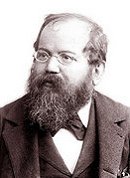
Wilhelm Steinitz
Wilhelm
(later William) Steinitz (May 17, 1836, Prague - August 12,
1900, New York) was an Austrian-American chess player and
the first official world chess champion. Known
for his original contributions to chess strategy such as his
ideas on positional play, his theories were held in high
regard by such disparate chess players as Aron Nimzowitsch,
Siegbert Tarrasch, and Emanuel Lasker.
Born in Prague (today Czech
Republic, then Austrian Empire),
Steinitz was regarded the best
player in the world ever since
his victory over Adolf Anderssen
in their 1866 match. His 1886
match victory over Johannes
Zuckertort is considered by most
as the first World Chess
Championship.
Steinitz
defended his title from 1886 to 1894, retaining it in four
matches against Zuckertort, Mikhail Chigorin (two times) and
Isidor Gunsberg. He lost two matches against Lasker, in 1894
and 1896, who became his successor as world champion.
Steinitz adopted a scientific approach to his study of the
game. He would formulate his theories in scientific terms
and "laws".
After
losing the world title, Steinitz developed severe mental
health problems and spent his last years in a number of
institutions in New York, making a series of increasingly
bizarre claims (including his having won - at pawn odds!—a
game of chess with God conducted via an invisible telephone
line). His chess activities had not yielded any great
financial rewards, and he died a pauper in his adopted home
city in 1900. Steinitz is buried in Cemetery of the
Evergreens in Brooklyn, New York.
Emanuel
Lasker, who took the championship from Steinitz, once said,
"I who defeated Steinitz shall do justice to his theories,
and I shall avenge the wrongs he suffered." Steinitz's fate,
and Lasker's keenness to avoid a similar situation of
financial ruin, have been cited among the reasons Lasker
fought so hard to keep the world championship title.
Steinitz
began to play professional chess at the age of 26 in
England. His play at this time was no different than that of
his contemporaries: sharp, aggressive, and full of
sacrificial play. In 1873 however, his play suddenly
changed. He gave immense concern to what we now call the
positional elements in chess: pawn structure, space,
outposts for knights, etc. Slowly he perfected his new
method of play that helped form him into the first Chess
World Champion.
What
Steinitz gave to chess could be compared to what Newton gave
to Physics: he made it a true science. By isolating a number
of positional features on the board, Steinitz came to
realize that all brilliant attacks resulted from a weakness
in the opponent's defence. By studying and developing the
ideas of these positional features, he perfected a new art
of defence that sharply elevated the current level of play.
Furthermore, he outlined the idea of an attack in chess
formed off of what we now know as "Accumulation Theory", the
slow addition of many small advantages.
Though it was not immediately evident, Steinitz had just
given the chess world its greatest gift. Though tactics
were, and still are, the most basic element to strong play,
his new theory gave greater opportunity to both defend and
use the brilliant combinations the era was renowned for.
When he fought for the first World Championship in 1886
against Johann Hermann Zukertort, it became evident that
Steinitz was playing on another level. Though he suffered a
series of defeats at the beginning of the match, it becomes
evident when watching the games who understood the game
better (for example, in the third game he was strategically
superior but failed to pull it together at the end). Over
time however, Steinitz's level of play continued to improve
and finished with a solid victory (+10 -5 =5).
Perhaps the evaluation of Steinitz's impact on chess can
best be evaluated by a fellow master of strategy, Tigran
Petrosian: "The significance of Steinitz's teaching is that
he showed that in principle chess has a strictly defined,
logical nature."
694 Steinitz games in
PGN.
Howard Staunton
Howard Staunton (April
1810 - June 22, 1874) was a chess master and unofficial World Chess
Champion. He was also a newspaper chess columnist, chess book author,
and minor
Shakespearean scholar. His name is remembered most today for the style
of chess figures he endorsed, the "Staunton" pattern.
Little is known about the life
of Staunton before his
appearance on the chess scene.
He said he was born in
Westmorland and his father's
name was William. He was poor
and had no official
education when he was young. It
is known that in 1836, Staunton
was in London, and he made a
subscription to William Walker's
book Games at Chess, actually
played in London, by the late
Alexander McDonnell Esq.
From the age of 26 or so, he began a serious pursuit of the
game. In 1838 he played many games with Captain William
Evans, inventor of the Evans Gambit. He also played a match
against the German chess writer Aaron Alexandre and lost.
In 1840 he began writing, doing a chess column for the New
Court Gazette from May to the end of the year. He had
improved sufficiently by 1840 to play and win a match with
the German master Popert, which he won by a single game. He
also began writing for British Miscellany which in 1841 led
to his founding the chess magazine known as the Chess
Player's Chronicle. Staunton edited the magazine until 1854,
when he was succeeded by Robert Barnett Brien.
In 1842 he played hundreds of games with John Cochrane.
Cochrane was a strong player, and Staunton had a good
warm-up for what was to be his greatest chess achievement
the following year. In 1843, Staunton played a short match
with France's champion, Pierre St. Amant, who was visiting
London. Staunton lost the match, 3½-2½, but later
arrangements where made for a second match, to be held in
Paris. Staunton went to Paris, where from November 14 to
December 20, 1843, he played a match at the Cafe de la
Regence against St. Amant, beating him decisively, 13-8.
After St. Amant's defeat, no other Frenchmen arose to
continue the tradition of French chess supremacy started
with Philidor, and London became the chess capital of the
world. Staunton was unofficially recognised as the best
player of the world from 1843 to 1851.
In 1847 Staunton wrote his most famous work, The
Chess-Player's Handbook, which didn't go out of print until
1993. Another book, The Chess-Player's Companion followed in
1849.
In May 1851, London held host to the Great Exhibition, and
London's thriving chess community, the world's most active,
felt obliged to do something similar for chess. Staunton
then took it upon himself to organise the world's first
chess tournament, to be held in London along with the World
Industrial Great Exhibition. The idea was to invite the
world's leading masters to compete, and showcase chess the
way the Great Exhibition was showcasing the world's
technology and culture. He persuaded some of the chess
amateurs in London and raised funds of £500 - a large sum of
money at that time - to help to host the event.
Birmingham 1858 was to be Staunton's last public chess competition. Staunton refused
to play Paul Morphy in public during the latter's visit to
England in 1858, saying he was too busy working on his
Shakespeare annotations. True to his word, he now
concentrated on writing on Shakespeare and chess. By 1860
his edition of Shakespeare had been published. Staunton
considered it a great work, but modern day critics do not
agree, and Staunton is an obscure name in modern
Shakespearean scholarship. Staunton also published a book in
1860 titled Chess Praxis, which to take advantage of the
public's desire for Morphy material had over 168 pages of
the American's games annotated by Staunton.
A memorial plaque now hangs at his old residence of 117
Lansdowne Road, London W11. In 1997 a memorial stone bearing
an engraving of a chess knight was raised to mark his grave
at Kensal Green Cemetery in London. Prior to this his grave
had been unmarked.
284 Staunton
games in
PGN.
|